Forty-five years ago, at the tender age of 17, I walked through the doors of the then ‘Royal Funeral Director’ to start work as a coffin fitter – my first full-time job. I could never have imagined that four decades later, I would end up Chief Executive of the UK’s third largest funeral director.
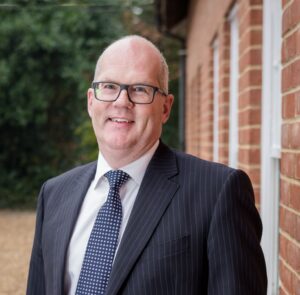
In those early years, my training took me through all aspects of the profession, and I soon realised that this was very much a team effort – every role was equally important. Whether you were responsible for the preparation and presentation of the deceased, fitting and polishing the coffin, arranging or conducting the funeral, preparing and driving the vehicles… everything mattered. And I was determined to always do everything asked of me to the best of my ability, a mantra I have been faithful to in all aspects of my life, both professionally and personally.
I joined Funeral Partners back in 2016 as Chief Operating Officer and soon became Chief Executive. To this day, I refer to myself as the ‘accidental CEO’ as even at this late in my career, I thought I would see my time out in operations, not heading the company.
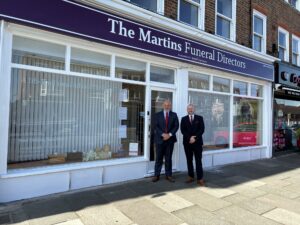
Funeral Partners has grown rapidly during my tenure, building a strong reputation as a well-run, high-quality funeral services business overseeing over 30,000 funerals each year. With 300 funeral homes staffed by over 1,300 dedicated funeral professionals serving communities across England, Wales, Scotland and Northern Ireland. It now includes more than 150 family businesses, which have entrusted their reputation and heritage to Funeral Partners.
Four and a half decades later, the heart of what we do remains the same: guiding families through one of life’s hardest moments. Every role remains equally important, and all I ask of my team is that they do everything to the highest standard and to the best of their ability.
What’s changed though? Oh, almost everything else.
A Growing and Changing Marketplace
When I started, our town had maybe two funeral directors, each known by just about everyone on the high street. Now? Across the UK, the number of funeral director businesses has swelled by around 28% in the last ten years. That expansion reflects growing competition and a fragmented marketplace where families have ever more choices – from traditional firms to newcomers advertising online with slick websites, social feeds, low-cost and virtual funeral directors with no premises, all vying for attention. The Competition and Markets Authority (CMA) has even taken a long, hard look at our sector, pushing for transparency on pricing and practices. It’s rare for our industry to attract that kind of scrutiny – but it’s a signal that things are shifting rapidly.
It’s worth noting that despite the growth of Funeral Partners and the other larger firms, around 60% of funerals are still conducted by independent family businesses.
Digital Beginnings: From Rolodexes to Google Rankings
For years, families were most likely to use the funeral director whose father handled his grandfather’s service or the nearest one, or perhaps they would seek advice from the trusted friend, or even the local vicar. Either way, the circle stayed tight. But now, families rarely live all their lives in the same town. Children grow up, move away, and come back home only for visits. Those broken local ties have already begun to erode the natural referral pipeline that used to define much of our work.
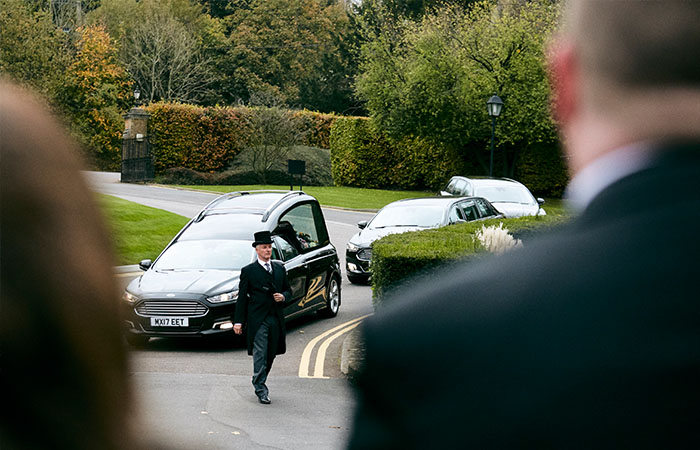
Instead of Yellow Pages and local reputation alone, we now invest in online marketing, SEO, Google reviews, and even social media presence. That was unheard of when I started – you didn’t really ‘shop around’ for a funeral; you knew who your local funeral director was. Today, families look online, not just for cost, but for style, values, and the different kinds of services offered. We have always said our vehicle and our funerals are our ‘shop window’. Well we now have the internet as another ‘shop window’, and it is becoming more and more important.
Technology has changed a lot; when I started, we didn’t have a fax machine let alone email, nor mobile phones – we did have pagers though! Today, we have specialist systems to help us; the typewriters and carbon paper have long gone.
Religion & Celebrations of Life
Traditional funerals still make up the vast majority of funerals arranged today, but it’s fair to say over the years they have become much more of a celebration of life with many more families reading a Eulogy or personalising a service through popular music rather than hymns.
Forty-five years ago, the vast majority of funerals tended to be Christian – prayers, hymns, the church cortege route. Today, the religious landscape is unmistakably different. The number of people identifying with no religion has risen sharply, and so we have seen the introduction of the civil celebrant. And of course, immigration has brought vibrant diversity – Muslim janazahs, Sikh rites, Hindu traditions, Eastern Orthodox and many more. It’s wonderful to witness faith and culture expressed in so many ways, but it demands deep learning from funeral directors who want to serve every family with respect and understanding.
When I reflect, I think traditional funerals have got better over the years, and are now much more personal and relevant.
Unattended Funerals
Perhaps the biggest shake-up of the last 10 years has been the rise of direct, unattended cremations – the no-frills option without family present. They were once rare; a choice for those with very modest means or, more often, very private dispositions. Now, they are growing in popularity, especially for those planning their own funeral.
This trend isn’t just stylistic. It speaks to deeper changes in how people grieve and remember – often preferring personal, intimate moments over tradition. There’s beauty in that, but also a challenge for us as professionals. I will always be a firm believer in the importance of traditions, funeral rites and having the opportunity for family and friends to say goodbye with the deceased present, to support the grieving process. However, our challenge is to support the needs of our clients and their families with a dignified and meaningful farewell, even when the format shifts. Ensuring no compromise on the quality of care and service.
Funeral Plans: The Rise of the Pre-Planner
Another big change has been the growth in funeral plan sales. Forty-five years ago, very few funeral businesses offered funeral plans. They relied on manual files noting someone’s ‘funeral wishes’ – it was all very informal. But today, just about every funeral director offers a funeral plan and there are numerous specialist plan providers. More people are choosing to pre-arrange and pay towards their funeral. This trend reflects a growing desire for control – “get it sorted, so my family doesn’t have to” – and for many, peace of mind. It’s been good for longer term business stability too; plans provide visibility and commitment to our funeral directors’ brand, long before a death occurs.
Our Choice Funeral Plan products have gone from strength to strength, providing the ability to plan and pay in advance towards a funeral, for many clients who want the reassurance that their funeral will be conducted with the local funeral directors they know and trust.
The provision and sale of funeral plans is now regulated, providing much-needed consumer protection. But with this regulation comes governance complexity not seen in the profession before, and we have had to adapt and learn.
Challenges Across the Board
For all this change – more competitors, more choices, more technology – there are also real challenges we face:
- Pressure on pricing and transparency: Families are more cost-conscious and better informed – a good thing, yet this increases pressure on margins for larger and smaller companies. The biggest concern is this can deter families from looking at quality and value over just headline price alone.
- Rising cost of funerals due to inflation: Property rent, fuel, vehicles, third party products, services, salaries, plus the increasing costs for pay-per-click, and administrative overhead brought in by compliance on both at need and pre-need. This all puts pressure on the price of a funeral, leading to families making funeral choices to fit budgets and even funeral debt, something we have to help with.
- People and training: We need to attract people who understand grief, culture and ceremony with empathy – not just logistics. Recruiting and retaining skilled team members is harder than ever.
- Regulation and compliance: Regulation in Scotland, continued CMA oversight, FCA regulation of Funeral Plans, GDPR, health and safety, employment laws – the regulatory landscape has become more complex, demanding and costly.

Looking Ahead: What the Future Holds
So, what does the future hold? I see three big themes shaping the next decades:
- Personalisation over Tradition – ceremonies that reflect lives lived uniquely, not a one-size-fits-all approach. Funeral directors need new skills and product and services diversification to accommodate these changes, needs of society and customer expectations.
- Digital Growth – virtual attendance, livestreams, online memorial and funeral management portals. Easier planning tools for families to collaborate, fully arrange, pay for and attend funerals from any distance. The web will continue to play a key role in the selection of a funeral director, and digital marketing will surpass traditional print media.
- Holistic care – support not just for the funeral day, but grief resources, probate and legal services, long-term remembrance, and community engagement. Our bereavement support and community activity is growing, fundraising and family donations are imperative for many local good causes and end of life organisations.
After 45 years, I’m still here in the funeral profession, as committed as ever. I may have swapped my hat and tails for a well-pressed suit, but at the end of the day, our work truly matters. For most of those who work in the profession, we all share the same passion and devotion to serving our clients and families in the very best way we can. With the utmost dignity, respect and exemplary care for the deceased.
At Funeral Partners, these are part of our core values and are at the heart of everything we do. Be it from behind the desk and laptops in our support offices, to the arrangers who hold the hands of a client in the funeral home, and the chauffeur bearer driving the route and carrying a loved one on their final journey – we all have a part to play, every role is equal.
People will always need someone steady and trustworthy to guide them through their time of need. So, as long as we keep caring deeply, listening closely, and adapting wisely, this industry will endure in ways both familiar and new.
Some things will never change: My shoes will still shine, and my car will be waxed and polished… I will always be a funeral director at heart. The privilege of helping a family say goodbye, the quiet hum of respect in a service, the ritual of comfort woven through shared loss. But how we get there, that has changed, and will continue to evolve. I’m proud to be a funeral professional and proud of the team at Funeral Partners, who provide amazing support to our bereaved clients and families throughout the UK, every day.
A life well remembered lives on.
Sam Kershaw
Chief Executive Officer
Funeral Partners
Choice Funeral Plans are provided by Alternative Planning Company Limited (APCL). APCL is authorised and regulated by the Financial Conduct Authority with firm reference number 965282. APCL is part of the Funeral Partners Group.